
P21 10mg
$110.00
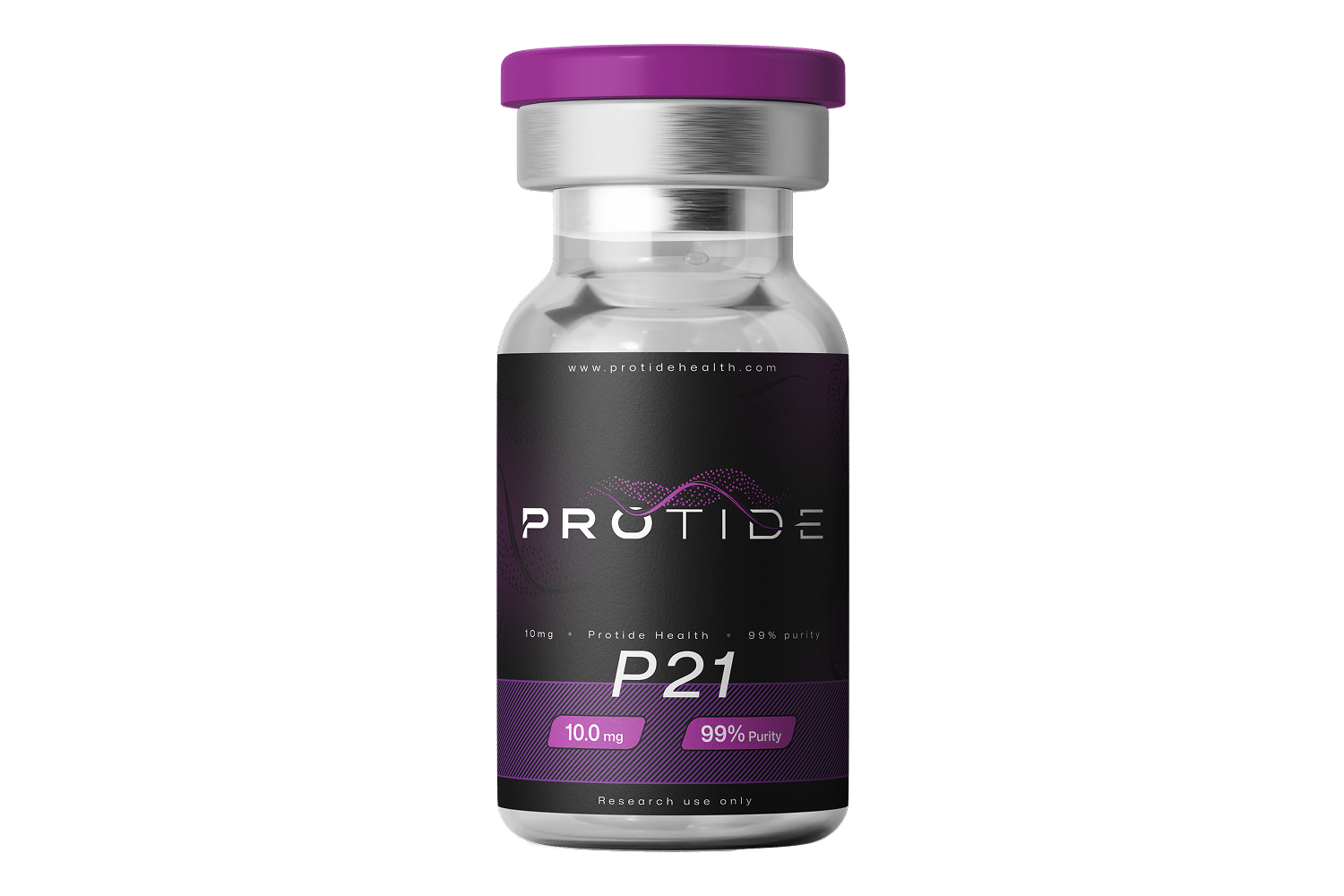
P21 peptide 10mg product shot featuring a professionally labeled Protide Health 3mL research vial containing white to off-white lyophilized P021 material, with the 10mg strength, CNTF-derived peptide identity, and research-use-only labeling clearly displayed against a clean laboratory-style background.


P21 Peptide 10mg – Protide Health USA
P21 Peptide Overview & Technical Specifications
P21, also known as P021 or Peptide 021, is a synthetic neurotrophic peptide mimetic derived from the biologically active region of human ciliary neurotrophic factor, or CNTF.
The parent peptide region corresponds to CNTF residues 148–151:
Asp-Gly-Gly-Leu
The research compound incorporates two major structural modifications:
- N-terminal acetylation
- A C-terminal adamantane-modified glycine
The resulting compound is commonly represented as:
Ac-DGGL-[adamantylated glycine]-NH₂
The adamantane-containing modification was introduced during development to increase lipophilicity and molecular stability relative to the unmodified CNTF-derived tetrapeptide.
Verified chemical specifications include:
- CAS Number: 1246751-68-7
- PubChem CID: 56589645
- Molecular Formula: C27H42N6O8
- Molecular Weight: Approximately 578.66 g/mol
Protide Health supplies P21 as 10mg of 99% purity lyophilized research material for controlled biochemical, cellular, neurotrophic-signaling, molecular, and qualified preclinical investigation.
Technical Specifications
- Product Name: P21
- Alternative Names: P021, Peptide 021
- Quantity: 10mg
- Form: Lyophilized powder
- Vial Size: 3mL
- Purity: 99%
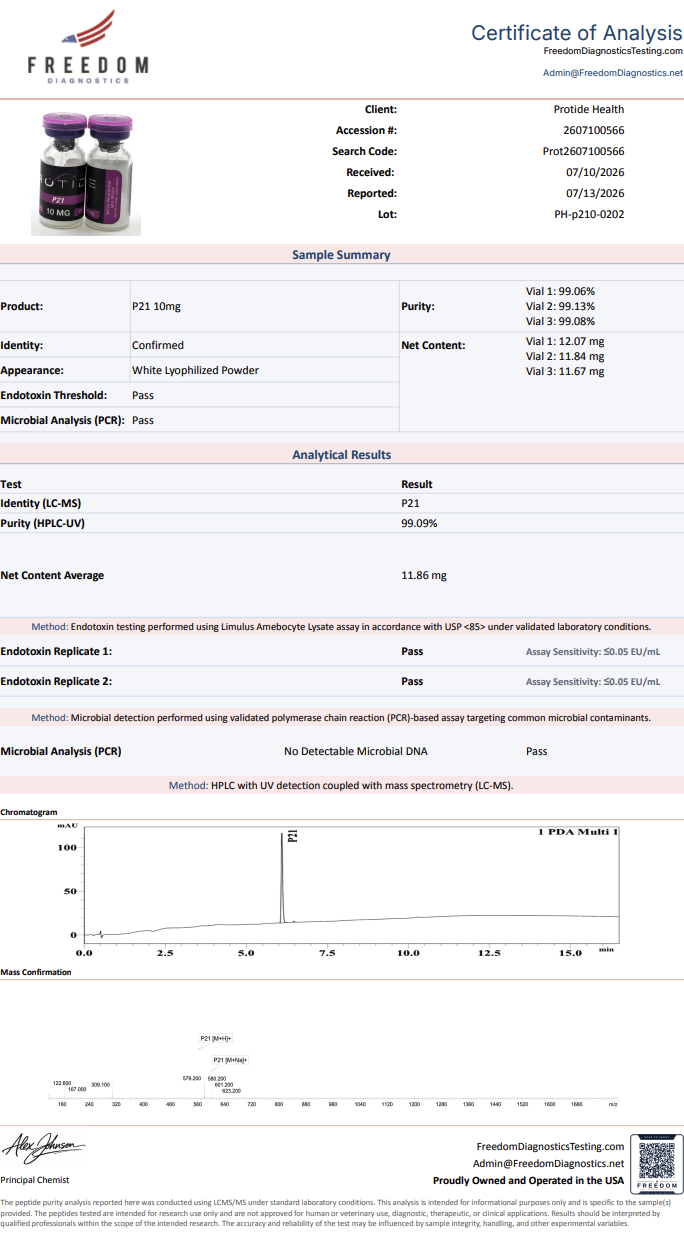
- Testing: HPLC-MS verified; third-party tested
- Classification: CNTF-derived peptide mimetic
- Parent CNTF Region: Residues 148–151
- Structural Representation: Ac-DGGL-[adamantylated glycine]-NH₂
- CAS Number: 1246751-68-7
- PubChem CID: 56589645
- Molecular Formula: C27H42N6O8
- Molecular Weight: Approximately 578.66 g/mol
- Appearance: White to off-white lyophilized powder
- Solubility: Soluble in water
- Storage: Store sealed at ≤6°C and protected from heat, light, and moisture
- Research Use: Biochemical, cellular, neurotrophic, molecular, analytical, and qualified preclinical research only
P21 Mechanism & Research Context
The experimental interest surrounding P21 originates from the biology of CNTF and related neurotrophic signaling.
CNTF is a cytokine-family neurotrophic factor involved in neuronal survival, differentiation, and cellular signaling. The development of smaller peptide mimetics was intended to preserve selected neurotrophic properties while altering molecular stability and transport characteristics.
Published preclinical work on P021 has focused particularly on:
- Brain-derived neurotrophic factor expression
- Neurogenesis
- Synaptic plasticity
- Neuronal maturation
- Leukemia inhibitory factor signaling
- GSK3β-associated pathways
- Tau phosphorylation
- Experimental cognition models
Researchers can review broader P21, P021 and CNTF-derived peptide research indexed by PubMed for the peer-reviewed preclinical literature.
Preclinical Research Applications
Neurogenesis Research
One of the earliest experimental areas investigated with P21 was adult hippocampal neurogenesis.
A 2010 mouse study reported changes involving newly generated neurons in the dentate gyrus following experimental treatment with P021.
Researchers examined endpoints including:
- Neural progenitor proliferation
- Neuronal differentiation
- Dentate-gyrus neurogenesis
- Maturation of newly formed neurons
- Synaptic-protein expression
These observations were generated in animal models and do not establish equivalent effects in humans.
BDNF-Associated Signaling
P021 research has repeatedly examined brain-derived neurotrophic factor, or BDNF.
BDNF participates in neuronal survival, differentiation, synaptic plasticity, and activity-dependent signaling.
Preclinical studies involving P21 have reported increased BDNF transcription or expression in certain experimental models.
This has led researchers to investigate relationships among:
- BDNF expression
- Neurotrophic signaling
- Synaptic proteins
- Neurogenesis
- Neuronal plasticity
- GSK3β activity
The evidence remains preclinical.
Synaptic-Plasticity Research
Synaptic plasticity describes changes in the strength, structure, or organization of neuronal connections.
Animal research with P021 has evaluated markers associated with:
- Synaptic proteins
- Dendritic structure
- Hippocampal function
- Cortical signaling
- Learning-related pathways
- Neuronal maturation
These studies provide experimental context for P21 but should not be interpreted as demonstrating cognitive enhancement in humans.
LIF Signaling Research
CNTF and leukemia inhibitory factor belong to related cytokine-signaling systems.
Experimental P021 research has proposed that part of its neurogenic activity may involve modulation of leukemia inhibitory factor signaling while promoting BDNF-associated pathways.
This research has contributed to mechanistic models involving:
- LIF signaling
- Neurotrophic balance
- Neural progenitor differentiation
- BDNF transcription
- Neuronal maturation
These proposed mechanisms remain dependent on model and experimental conditions.
P21 in Experimental Aging Models
Aged-rat research has evaluated P021 in models of age-associated changes in hippocampal neurogenesis, synaptic signaling, and behavioral performance.
Reported experimental endpoints included:
- BDNF expression
- Hippocampal neurogenesis
- Synaptic markers
- Cortical changes
- Hippocampal metabolites
- Learning and memory tasks
These findings are restricted to preclinical animal models and do not establish anti-aging or cognitive benefits for the Protide Health research material.
P21 in Experimental Neurodegenerative Models
P021 has also been investigated in transgenic mouse models used to study Alzheimer-associated pathology.
Research endpoints have included:
- Tau phosphorylation
- GSK3β activity
- Soluble amyloid-beta
- Neurogenesis
- Synaptic plasticity
- Dendritic markers
- Behavioral testing
A 2014 study using 3xTg-AD mice reported reductions in abnormal tau phosphorylation alongside changes in BDNF/GSK3β-associated pathways.
These results relate specifically to genetically engineered mouse models and do not demonstrate prevention or treatment of Alzheimer’s disease in humans.
P21 and Developmental-Neuroscience Research
More recent studies have extended P021 research to developmental-neurology models.
For example, experiments involving CDKL5-deficiency models have examined neuronal proliferation, maturation, BDNF-associated signaling, structural endpoints, and behavioral phenotypes.
These studies further illustrate the range of preclinical systems in which P21 has been investigated while also highlighting that the available evidence remains primarily cellular and animal based.
P21 vs p21 Cell Cycle Inhibitor
The keyword p21 is scientifically ambiguous.
P21 peptide should not be confused with p21Cip1/Waf1, the protein encoded by the CDKN1A gene.
CDKN1A p21 is a cyclin-dependent kinase inhibitor involved in processes such as:
- Cell-cycle control
- Cellular senescence
- DNA-damage responses
- p53-associated signaling
- Cell-cycle arrest
That protein is chemically and biologically unrelated to P021 peptide.
Therefore, searches such as p21 cell cycle inhibitor or p21 cell cycle arrest usually refer to CDKN1A biology rather than the CNTF-derived peptide sold by Protide Health.
P21 Structural Design
The adamantane-associated structural modification is a defining characteristic of P021.
Adamantane is a rigid hydrophobic cage structure used in medicinal chemistry to alter properties such as lipophilicity.
Published P021 studies describe incorporation of an adamantane-modified glycine at the C-terminal region to improve stability and transport characteristics compared with the parent short CNTF-derived peptide.
The resulting P21 molecule is chemically distinct from unmodified DGGL.
Research Limitations
The evidence surrounding P021 requires conservative interpretation.
Important limitations include:
- Published evidence is predominantly preclinical.
- Much of the P021 literature originates from a relatively concentrated group of investigators.
- Animal learning and memory tasks cannot establish human cognitive effects.
- Mouse Alzheimer models do not reproduce every aspect of human Alzheimer’s disease.
- Increased BDNF expression does not establish therapeutic efficacy.
- Reduced tau phosphorylation in mice does not establish treatment of human tauopathies.
- Experimental neurogenesis findings cannot automatically be extrapolated to humans.
- No established human clinical efficacy or safety profile exists for this Protide Health product.
- Research findings from P021 cannot automatically be applied to unrelated compounds bearing the name “p21.”
For these reasons, P21 is supplied strictly for qualified laboratory investigation.
Literature & Citation Index
Neurotrophic Peptides Incorporating Adamantane Improve Learning and Memory, Promote Neurogenesis and Synaptic Plasticity in Mice
Authors: Bin Li et al.
Journal: FEBS Letters
Year: 2010
PMID: 20600002
DOI: 10.1016/j.febslet.2010.06.025
Research Context: Original P021 design, adamantane modification, neurogenesis, neuronal maturation, synaptic plasticity, and mouse behavioral models.
Rescue of Cognitive-Aging by Administration of a Neurogenic and/or Neurotrophic Compound
Year: 2014
PMID: 24702821
DOI: 10.1016/j.neurobiolaging.2014.02.017
Research Context: Aged-rat model, neurogenesis, BDNF expression, synaptic markers, hippocampal biology, and age-associated behavioral endpoints.
Disease Modifying Effect of Chronic Oral Treatment With a Neurotrophic Peptidergic Compound in a Triple Transgenic Mouse Model of Alzheimer’s Disease
Year: 2014
PMID: 25046994
DOI: 10.1016/j.nbd.2014.07.001
Research Context: 3xTg-AD mouse model, tau phosphorylation, BDNF, GSK3β, neurogenesis, synaptic plasticity, and amyloid-related endpoints.
Neurotrophic Treatment Initiated During Early Postnatal Development Prevents Alzheimer-Like Behavior and Synaptic Dysfunction
Year: 2021
Research Context: P021 structure, CNTF residues 148–151, adamantylated glycine, BDNF-associated signaling, synaptic function, and transgenic mouse research.
Effects of a Ciliary Neurotrophic Factor Small-Molecule Peptide Mimetic in an In Vitro and In Vivo Model of CDKL5 Deficiency Disorder
Year: 2024
Research Context: P021, BDNF-associated pathways, neuronal proliferation and maturation, cell models, and CDKL5-deficient mouse research.
Related Protide Health Research Products
Researchers examining small-molecule metabolic pathways may review 5-Amino-1MQ research material for an NNMT-focused research system chemically distinct from P021.
The Acetic Acid 0.6% laboratory research solution provides a separate reagent for research workflows and is not mechanistically related to CNTF signaling.
Researchers may also examine AOD-9604 research peptide for a structurally and mechanistically different peptide research model.
Frequently Asked Questions
What is P21 peptide?
P21 or P021 is a synthetic CNTF-derived peptide mimetic based on residues 148–151 of human ciliary neurotrophic factor and modified with an adamantane-containing C-terminal residue.
What is the structure of P21?
P021 is commonly represented as:
Ac-DGGL-[adamantylated glycine]-NH₂
What is the molecular formula of P21?
The verified formula is C27H42N6O8, with molecular weight approximately 578.66 g/mol.
What is the CAS number for P21?
The supplied and independently supported CAS number is 1246751-68-7.
What is the PubChem CID for P21?
The verified PubChem identifier is CID 56589645.
What does P21 research investigate?
Preclinical research has investigated neurogenesis, BDNF-associated signaling, synaptic plasticity, neuronal maturation, LIF signaling, GSK3β activity, and tau-related experimental pathways.
Is P21 the same as the p21 cell-cycle inhibitor?
No. P021 peptide is unrelated to p21Cip1/Waf1, the CDKN1A-encoded cell-cycle regulatory protein.
Has P21 been proven to improve cognition in humans?
No. Published findings primarily involve animal and cellular models. They do not establish cognitive enhancement or therapeutic effects in humans.
What purity does Protide Health specify?
Protide Health specifies 99% purity, with HPLC-MS verification and third-party testing.
What form is P21 supplied in?
P21 is supplied as 10mg of white to off-white lyophilized research material in a 3mL vial.
Is P21 intended for human use?
No. It is supplied exclusively for biochemical, cellular, molecular, neurotrophic-signaling, analytical, in-vitro, and qualified preclinical research.
Laboratory Terms & Compliance
Laboratory Research Use Only
This product is supplied exclusively for laboratory research, analytical testing, in-vitro studies, preclinical research, and qualified scientific experimentation.
It is not intended for human or veterinary consumption, medical use, diagnostic use, therapeutic use, cognitive enhancement, neurological treatment, anti-aging use, or clinical administration.
No human dosage, dosing schedule, administration route, treatment recommendation, or preparation instructions are provided.
By purchasing this research material, the purchaser is responsible for appropriate laboratory handling, storage, and use under applicable institutional, federal, state, and local requirements. Please review the Protide Health Terms & Conditionsbefore purchasing.
For research use only.
| Select vial strength |
10mg |
|---|


MAECENAS IACULIS
Vestibulum curae torquent diam diam commodo parturient penatibus nunc dui adipiscing convallis bulum parturient suspendisse parturient a.Parturient in parturient scelerisque nibh lectus quam a natoque adipiscing a vestibulum hendrerit et pharetra fames nunc natoque dui.
ADIPISCING CONVALLIS BULUM
- Vestibulum penatibus nunc dui adipiscing convallis bulum parturient suspendisse.
- Abitur parturient praesent lectus quam a natoque adipiscing a vestibulum hendre.
- Diam parturient dictumst parturient scelerisque nibh lectus.
Scelerisque adipiscing bibendum sem vestibulum et in a a a purus lectus faucibus lobortis tincidunt purus lectus nisl class eros.Condimentum a et ullamcorper dictumst mus et tristique elementum nam inceptos hac parturient scelerisque vestibulum amet elit ut volutpat.
Related products

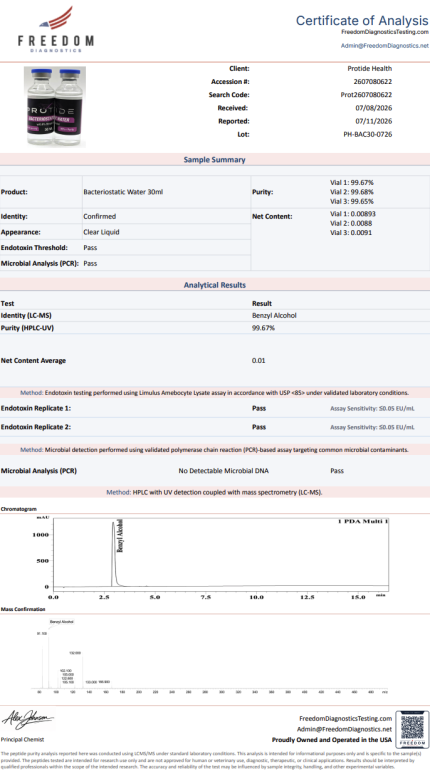
Bacteriostatic Water (0.9% Benzyl Alcohol)
Price range: $14.99 through $18.99
Cagrilintide
Price range: $95.00 through $155.00
DSIP
$100.00
GLP-3
Price range: $145.00 through $550.00
Research Bundle (bpc 157 and tb 500, MOTS-c)
Original price was: $215.00.$205.00Current price is: $205.00.
Reviews
There are no reviews yet.